As Sport Integrity Action Month brings the global Sport community together, SIGA’s 4 Questions 4 Leaders gives a voice to the people and organisations committed to driving meaningful change.
Four questions. Fourt leaders. Four perspectives. One shared commitment to Sport Integrity.
A platform for SIGA Members and Committed Supporters. A space to share insights, challenge perspectives and inspire action. A contribution to the global conversation on Sport Integrity — throughout a month dedicated to turning shared values into meaningful action.

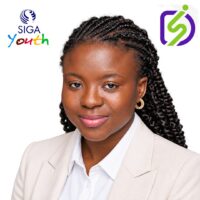
Adeola Adesoba
Director, IDSportAfrica
From my experience across technology and grassroots sport, the greatest threat is that risks are evolving faster than accountability systems. AI-enabled misinformation, online abuse, digital betting and misuse of athlete data now compound longstanding problems such as weak governance, safeguarding failures and exclusion. These threats cross borders, but their effects fall hardest on young people and under-resourced communities. Global cooperation is essential to protect trust and ensure no participant is left exposed.
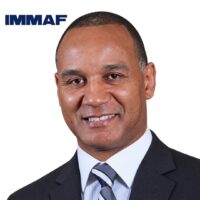
Densign White
CEO, IMMAF; Member, SIGA Council
The biggest risk to sport is the lack of transparency and accountability to stakeholders, members, athletes and the public.
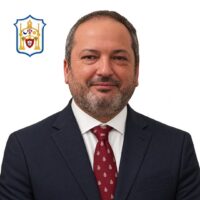
Robert DaCamara
President, Ponta Delgada Football Association
The greatest threat to Sport Integrity is complacency.
Regulators and decision-makers must be in a constant state of awareness and prepared to act upon any sign of wrongdoing in any sports environment.
Leaders in sports must be fully committed to consistently implementing measures that safeguard players, referees, coaches and all other stakeholders in the sports world from any and all forms of corruption, such as match-fixing.
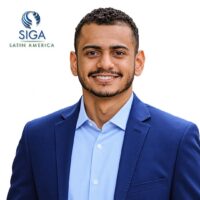
Vinicius Sousa
Senior Director of Institutional Relations and Strategic Partnerships, SIGA LATIN AMERICA
In my view, the greatest threat is the widening gap between the commercial growth of sport and the maturity of its governance structures. Weak institutions, outdated regulations and fragmented oversight create fertile ground for corruption, competition manipulation and the infiltration of organised crime. In Latin America, where sport has extraordinary social and economic significance, the consequences extend far beyond the field of play. Addressing these structural weaknesses must be a global priority if sport is to preserve its credibility and transformative power.

Adeola Adesoba
Director, IDSportAfrica
Genuine leadership means building integrity into everyday decisions, not responding only after harm occurs. Leaders must listen to athletes and young people, fund safeguarding and data protection, provide safe reporting channels and accept independent scrutiny. For grassroots organisations, commitments must also be practical and properly resourced. Leadership is proven when an organisation publishes its progress, addresses failures transparently and protects people even when doing so is difficult or inconvenient.
Densign White
CEO, IMMAF; Member, SIGA Council
Actions speak louder than words. Leaders of sports organisations must fulfil their governance responsibilities, just by doing the basics to begin with and setting a good example. It’s important to communicate effectively with one’s Board of Directors, commissions and committees, to hold General Assemblies and elections for Director positions, and to have statutes that are fit for purpose.
Robert DaCamara
President, Ponta Delgada Football Association
Genuine leadership is best illustrated by the ability to resist settling into a comfort zone and to be driven instead by a commitment to good governance and accountability.
Such commitment is proven by one’s willingness to tackle difficult issues, adopt safeguarding policies and enforce them with fairness and bold decision-making.
Vinicius Sousa
Senior Director of Institutional Relations and Strategic Partnerships, SIGA LATIN AMERICA
Genuine leadership means having the courage to reform the institutions we lead, even when this challenges established interests. Integrity must be embedded in strategic decisions, budgets and organisational culture, supported by effective compliance programmes, education and meaningful stakeholder representation. Our work at SIGA LATIN AMERICA, from football governance reform to sports betting integrity, reinforces my conviction that lasting change requires cooperation between sport, governments, business and civil society. Leadership is measured by what we deliver.

Adeola Adesoba
Director, IDSportAfrica
No. Sport cannot mark its own homework and expect lasting trust. Independent scrutiny should be treated as a tool for improvement, not a threat to autonomy or reputation. It must extend beyond elite institutions to grassroots and youth sport through proportionate, accessible systems. Reviews should examine not only written policies but also athletes’ lived experiences, with findings, corrective actions and progress communicated openly to participants, families and communities.
Densign White
CEO, IMMAF; Member, SIGA Council
For too long, International Sports Federations have been marking their own homework. I think that funded organisations, especially those receiving public money, should be independently audited. The Sport Integrity Global Alliance’s (SIGA) SIRVS should be utilised more by sponsors and Governments who are funding huge hosting rights fees for IFs whose integrity could be questionable.
Robert DaCamara
President, Ponta Delgada Football Association
Independent scrutiny is a cornerstone of trust in any organization, including those in Sport.
Any and all forms of checks and balances should be not only welcomed but encouraged. No matter how well-intentioned an organization may be, self-regulation alone will ultimately prove short-sighted; complacency will take a front seat, standards will be lowered and good governance will falter.
Independent oversight is essential.
Vinicius Sousa
Senior Director of Institutional Relations and Strategic Partnerships, SIGA LATIN AMERICA
No. The autonomy of sport cannot be confused with an absence of accountability. Organisations entrusted with a significant social and economic responsibility must be willing to demonstrate how decisions are made, how resources are managed and how conflicts of interest are addressed. Independent scrutiny should be embraced as a means of strengthening institutions, not undermining their autonomy. Moving from self-declared compliance to independently verified standards is essential to earning and sustaining the trust of all stakeholders.

Adeola Adesoba
Director, IDSportAfrica
I would create a global, open-source Sport Integrity Toolkit for grassroots and youth organisations. It would translate international standards into practical safeguarding, financial transparency, anonymous reporting, cyber-risk and data-protection tools, with meaningful youth participation. A tiered verification pathway would let smaller organisations demonstrate progress without the burden placed on major federations. This would make integrity measurable, affordable and achievable where sport is first experienced.
Densign White
CEO, IMMAF; Member, SIGA Council
The Sport Integrity Global Alliance’s (SIGA) SIRVS should be utilised more by sponsors and Governments who are funding huge hosting rights fees for IFs whose integrity could be questionable. This would force many Federations to reflect on their integrity measures and improve their Governance performance.
Robert DaCamara
President, Ponta Delgada Football Association
I would implement a certification process in which good governance, accountability and integrity would be measured in order to establish minimum standards for sports organizations.
The process would have to include education for all sport stakeholders on a regular basis and a zero-tolerance approach to racism, bullying, violations of equal rights and corruption.
Vinicius Sousa
Senior Director of Institutional Relations and Strategic Partnerships, SIGA LATIN AMERICA
I would make independent verification of integrity standards a progressive requirement for public funding, commercial sponsorship and professional competition licensing. The SIGA Universal Standards and the SIGA Independent Rating & Verification System (SIRVS) provide a credible framework for this. Supported by capacity-building and proportionate implementation, this measure would align economic incentives with good governance, reward organisations committed to reform and make integrity a tangible condition for sustainable growth in sport.
– THE END –
ABOUT SIGA
SIGA is the world’s leading organisation for Sport Integrity. We are creating a whole new landscape for the sports industry by delivering independent global rating and certification for world Sport to ensure it is governed and operates under the highest integrity standards: The SIGA Universal Standards.
Funded by our Members, SIGA is a non for profit global independent organisation with one aim: To ensure the sport industry is governed under the highest integrity standards so that the values of sport are protected.
SIGA is the only organisation to bring together sport, governments, academia, international organisations, sponsors, business, rights holders, NGOs and professional services companies, from every region in the world, around a common cause of fostering greater integrity throughout sport.
SIGA is headquartered in Geneva, Switzerland, as a non for-profit association, and comprises of the following continental subsidiaries: SIGA AMERICA, SIGA EUROPE and SIGA LATIN AMERICA.
For more information on SIGA, including its vision, mission and reform agenda, please refer to the website: www.siga-sport.com and FAQs.
To contact SIGA, please email: comms@siga-sport.com.