
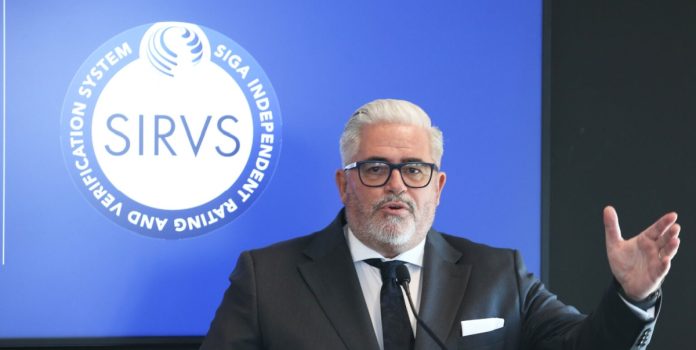
Ahead of SBC Summit 2026, Emanuel Macedo de Medeiros, Co-Founder and Global CEO of the Sport Integrity Global Alliance (SIGA), spoke to SBC Notícias Brasil about some of the most pressing challenges facing sports betting integrity in Brazil and across the Ibero-American region.
The interview comes in the build-up to SBC Summit, which will take place in Lisbon, Portugal, from 29 September to 1 October 2026, with SIGA participating as Sport Integrity Partner. During the event, Medeiros will join the Ibero-American Sports Betting Integrity Forum, where discussions will focus on strengthening cooperation between regulators, sports organisations, betting operators and public authorities, and translating integrity commitments into effective action.
Read the interview in Portuguese: SBC Notícias Brasil.
Read the full interview in English below.
SBC Summit 2026: Emanuel Macedo de Medeiros, SIGA, Explains What Is Still Needed to Strengthen Sports Betting Integrity in Brazil
By Leonardo Biazzi
The consolidation of regulated sports betting markets in Latin America has brought new tools to monitor suspicious activity and combat competition manipulation. For Emanuel Macedo de Medeiros, Co-Founder and Global CEO of the Sport Integrity Global Alliance (SIGA), however, the existence of rules and licences is not enough: the different stakeholders in the ecosystem need to turn alerts into investigations and, where necessary, sanctions.
In an interview with SBC Notícias Brasil, Medeiros assessed the main challenges facing sports betting integrity, including information sharing between operators, authorities and sports organisations, the fight against the illegal market, and prevention among athletes and other sports participants. Looking at Brazil, he said the country had made progress in building its regulatory framework, but identified operational integration between institutions as one of the main gaps that remain.
Medeiros will take part in the “Ibero-American Sports Betting Integrity Forum” panel during SBC Summit 2026, alongside Ricardo Domingues, President of APAJO, and João Paulo Almeida, a Sport Integrity Consultant to international organisations including INTERPOL and the Council of Europe.
During the interview, Medeiros also argued that the discussions at SBC Summit Lisbon should lead to concrete measures for regional cooperation, with common protocols, permanent points of contact and secure mechanisms for information sharing.
SBC Notícias Brasil: Ibero-American countries are at very different stages of regulatory maturity. In your view, what minimum integrity requirements should any regulated sports betting market adopt, regardless of the regulatory model chosen?
Emanuel Macedo de Medeiros: My position is clear: regulation without integrity is merely commercial authorisation. A licence is not a definitive certificate of good standing; it is the beginning of an ongoing obligation of compliance, supervision and accountability. The regulatory model may vary. These principles do not.
There are five minimum requirements. First, rigorous licensing that identifies who controls the operator, the source of its funds, and its financial and technological capacity. Second, technically competent supervision, with operational independence and genuine powers to audit, investigate and sanction. Third, robust bettor identification, financial traceability and continuous monitoring. Fourth, immediate reporting of suspicious betting activity and secure information sharing. Fifth, a sports sector that assumes its own responsibilities, with clear rules, protected reporting channels, independent investigations and effective sanctions.
To this I would add continuous education, responsible gambling, whistleblower protection and a determined fight against the illegal market. Not as add-ons, but as integral parts of the same integrity system.
The SIGA Universal Standards provide this common foundation, and the SIGA Independent Rating and Verification System (SIRVS) makes it possible to independently verify whether those commitments exist in practice. Ultimately, the distinction is simple: a market does not have integrity because of what it claims, but because of what it can demonstrate.
SBC Notícias Brasil: Information sharing between operators, regulators, sports organisations and public authorities is consistently identified as one of the main tools in the fight against competition manipulation. In practice, what still prevents this exchange of information from happening quickly and effectively? And what kind of structure should exist to connect these different stakeholders?
Emanuel Macedo de Medeiros: What is often missing is not information. It is trust. It is knowing what to share, with whom, when, and with what legal protection. When this is not defined before an alert arises, time is lost precisely when every minute counts.
Legitimate questions remain regarding confidentiality, data protection and the use of information in disciplinary or criminal proceedings. But data protection cannot be turned into a pretext for paralysis. Nor is there yet a common language: what one operator considers atypical may not be classified in the same way by another. Permanent points of contact, response deadlines and feedback to those who raised the alert also remain lacking.
It was to address these challenges that SIGA created its Universal Standards on Sports Betting Integrity, now available in Portuguese. They turn a much-used word — cooperation — into responsibilities, channels, timelines and outcomes that can be verified. Effective cooperation cannot be improvised once a crisis begins.
In Brazil, FAIR now brings together ten authorised operators that are members of SIGA LATIN AMERICA. It is a pre-competitive, structured and confidential forum, operating within the limits of the law, where trust is built, terminology is aligned and emerging risks are identified. It does not replace the regulator or investigative authorities. It helps those channels work better.
The next step should be a national integrity platform, connected to an international network and designed to operate every day, not only when a scandal breaks. It should bring together the competent bodies, define who does what, and ensure that the right information reaches, securely and in a timely manner, those who can act. Without that, we accumulate alerts. With it, we build cases.
SBC Notícias Brasil: Identifying suspicious betting activity is only the beginning of the process. Where is the main bottleneck today between detecting a potential case of competition manipulation and conducting an investigation capable of resulting in sporting or criminal sanctions?
Emanuel Macedo de Medeiros: Today, the main problem is not detecting the signal. It is ensuring that the signal quickly reaches those who can investigate — and that it reaches them in a form that can serve as evidence. A betting anomaly is a relevant alert, but it is not a conviction. It is the beginning of the work, not the end.
Betting accounts, financial flows and links to competition participants need to be cross-referenced; original records must be preserved; and the chain of custody must be secured. Everything must be done within the law, with respect for due process and the rights of the defence.
This is where many cases fall apart. The sports organisation may lack investigative capacity; the police or public prosecutor may receive information too late or without the necessary technical context; and sporting and criminal proceedings operate according to different timelines and standards of proof. They must remain separate, but they need to be coordinated. Neither can be allowed to paralyse or compromise the other.
We need clear protocols, defined responsibilities and specialised professionals. Technology detects patterns; investigations establish the facts. Without a legally robust bridge between intelligence and evidence, we will have many alerts and little accountability.
SBC Notícias Brasil: To what extent is it possible to build an effective sports integrity system when a proportion of betting continues to take place outside the regulated market and, consequently, outside formal monitoring and data-sharing mechanisms? Which stakeholders need to assume greater responsibility in tackling this problem?
Emanuel Macedo de Medeiros: You cannot fully protect what you cannot see. The illegal market is a blind spot: it does not adequately identify bettors, report suspicious activity or protect consumers, and it can serve as a channel for fraud, money laundering and competition manipulation. And we should be precise: illegal is not synonymous with foreign or digital. An operator is illegal when it offers betting to the Brazilian public without valid authorisation.
Authorised operators have invested to enter the regulated perimeter and are subject to supervision, auditing and sanctions. A licence does not grant them immunity; those who break the rules must be held accountable. But there is an essential difference: an authorised operator can be identified and sanctioned. Placing it on the same footing as those who deliberately remain outside the law would be profoundly unfair and would destroy the incentive to comply.
In 2026, Brazil strengthened the tools available to financially choke off unauthorised betting. Now they need to be enforced. The answer is not to lower standards in order to compete with the illegal market. It is to make the regulated market safer and illegal activity economically unviable.
This responsibility does not belong to the regulator alone. The State must coordinate enforcement, blocking measures, investigations and sanctions. The financial and payments system must prevent illegal transactions. Digital platforms, social networks, app stores, advertising channels and influencers cannot continue to provide visibility or revenue to illegal operators. And providers of technology, data and affiliate services must know their customers.
Licensed operators must share intelligence and audit their affiliates; sport must report suspicious approaches and protect participants. Regulation loses authority when it continually tightens the screws on those who comply with the rules while illegal offerings remain accessible. Tackling those offerings is an obligation for the entire ecosystem and a condition of fair competition.
SBC Notícias Brasil: Some betting markets may present greater risks of manipulation, particularly in lower-profile competitions or where bets involve individual actions by athletes. Should regulators consider specific restrictions on certain types of markets, or could this simply shift demand towards illegal operators? How can the right balance be struck?
Emanuel Macedo de Medeiros: I reject the false choice between allowing everything and banning everything. The serious answer is risk-based regulation, grounded in evidence, proportionate and subject to review.
Risk does not depend solely on the name of the market. It depends on the competition, the level of oversight, the economic vulnerability of participants, the quality of the data, liquidity and the possibility that a single individual can determine the outcome. It is this reality — not commercial convenience — that should guide the decision.
The response should be graduated. It may involve exposure limits, pre-match betting only, suspension of in-play markets, enhanced monitoring, reliable data and greater traceability. When these measures are insufficient, or when the competition does not provide minimum conditions of integrity, restrictions will be necessary.
It is true that disproportionate prohibitions can push demand towards the illegal market. But that risk does not legitimise products that expose sport to an obvious vulnerability. Every decision should be reasoned, subject to consultation and reviewed in light of the results.
Those seeking to offer a market should bear the burden of demonstrating that it can be offered safely. A mature regulator does not prohibit in order to appear tough, nor permit in order to appear liberal. It decides on the basis of evidence, proportionality and responsibility.
SBC Notícias Brasil: When we talk about competition manipulation, the focus often falls on monitoring and punishment. What role should prevention play among athletes, referees and other sports participants themselves? Are sports organisations currently doing enough to educate these people and provide safe channels for reporting suspicious approaches?
Emanuel Macedo de Medeiros: Prevention is not an adjunct to integrity. It is its first line of defence. And it does not begin in the training room: it begins by reducing vulnerabilities. Unpaid salaries, precarious contracts, mental health problems or gambling-related harm leave participants more exposed. Manipulators look first for vulnerable people and only then for weaknesses in the system.
In general terms, sport is still not doing enough. A survey presented to the Copenhagen Group in May 2026 gathered 2,845 responses: 65% said they had never received education on competition manipulation; 10% said they had been approached; and, among those, fewer than half reported the incident. It is not a snapshot of all of world sport, but it is a warning sign that no responsible person can ignore.
Education should begin at youth level, be mandatory, continuous and tailored to each role. And it must be practical: explain the rules, show how manipulators make contact and teach people what to do in the first few minutes after an approach — do not negotiate, preserve the messages, seek support and report through the designated channel. A one-off presentation and an attendance sheet do not constitute prevention.
EPIC Global Solutions, a SIGA member and partner, demonstrates the value of lived experience. When athletes and other professionals hear from people who have directly suffered the consequences, the rules cease to be abstract. They become human, tangible and difficult to ignore.
We are assessing the expansion of this work into new markets, including Latin America. The objective should not merely be to inform. It should be to change behaviour, build trust and reduce risk before it materialises.
Reporting channels need to be independent, confidential and accessible, backed by protection against retaliation and by legal and psychological support. It is not enough to tell people to speak up. We must ensure that they can do so safely, that they are heard and that they are not left alone after reporting.
SBC Notícias Brasil: SIGA has already entered into cooperation agreements in Brazil involving betting monitoring, information sharing and the prevention of competition manipulation. Looking at Brazil’s regulated market today, what gaps still need to be addressed for this cooperation model to work fully in practice?
Emanuel Macedo de Medeiros: Brazil has made significant progress in a short period of time. It has consolidated the federal legal framework, brought the authorised market into operation, defined responsibilities within the Ministry of Finance and the Ministry of Sport, and established, in March 2026, the National Policy for the Prevention of and Response to Sports Competition Manipulation.
SIGA is proud to have contributed to this process through Technical Cooperation Agreement No. 40/2024 with the Secretariat of Prizes and Betting, agreements with the Ministry of Sport and the Office of the Comptroller General, and cooperation with the CBF, the São Paulo Football Federation and many other organisations. FAIR adds to this foundation the permanent participation of ten authorised operators that are members of SIGA LATIN AMERICA.
But agreements are not results. The main gap today is operational integration. It is necessary to define unequivocally which alerts are reported, to whom, through which channel, within what timeframe and with what feedback. Evidence must be preserved, the system must be tested through joint exercises, and it must be ensured that it also works in the lower divisions, women’s sport, youth competitions and wherever resources are more limited. A system is only truly national when it leaves no one behind.
And it is essential to measure and publish aggregate results: response times, investigations opened, decisions concluded and preventive impact. In the midst of an election debate, integrity cannot be a slogan, nor can public policy be improvised. It is legitimate to debate taxation, advertising, social protection and the limits of the market. It is not legitimate to conflate authorised operators with illegal ones or replace evidence with absolute positions. SIGA speaks neither for the government nor for the industry. It speaks independently, neutrally and with the authority of an organisation that demands integrity from everyone. Brazil has built the foundations. Now it must demonstrate that they work.
SBC Notícias Brasil: If the objective is to move from isolated national initiatives towards a genuine Ibero-American strategy for sports betting integrity, what would be the most important next step? Do you see scope for common protocols, permanent information-sharing mechanisms or some form of cross-border coordination between regulators and sports organisations?
Emanuel Macedo de Medeiros: We do not need another conference that ends with a photograph. We need to leave Lisbon with a protocol, a network of focal points and an implementation timetable. My proposal is for SBC Summit Lisbon to put a Lisbon Roadmap for Sports Betting Integrity in the Ibero-American Space on the table.
The threat is transnational by nature. A bet can be placed in one country on a competition taking place in another, through a platform, payment system or criminal network established in a third jurisdiction. If risk can cross borders in seconds, the information needed to confront it cannot remain blocked at those borders.
SIGA can play a decisive but clearly defined role here: bringing together regulators, sport, operators, integrity bodies and public authorities; providing the Universal Standards as a common foundation; promoting training and joint exercises; and supporting independent assessment of results. We do not want to replace States. We want to make existing structures work together and at the same speed.
Portugal and Spain, both Parties to the Macolin Convention, can build a bridge between European experience and Latin American realities. And the formal invitation extended to Brazil in April 2026 to sign and ratify the Convention created a historic opportunity that should be seized. Other countries do not need to wait: they can begin applying its core principles now.
Lisbon must deliver concrete results: a common classification of alerts, up-to-date national contacts, a secure channel, rapid preservation of data, coordination between sporting and criminal proceedings, and independent assessment. SIGA is ready to convene this first meeting and make its Standards available. Success will not be measured by the number of signatures in a photograph, but by the time between alert and action, the cases prevented and the accountability achieved. The threats already cross borders. Our response must do the same — with speed, legality and accountability.
The interview with Emanuel Medeiros, Co-Founder and Global CEO of the Sport Integrity Global Alliance (SIGA), is part of a series that SBC Notícias Brasil is conducting with confirmed speakers at SBC Summit 2026.
– THE END –
ABOUT SIGA
SIGA is the world’s leading organisation for Sport Integrity. We are creating a whole new landscape for the sports industry by delivering independent global rating and certification for world Sport to ensure it is governed and operates under the highest integrity standards: The SIGA Universal Standards.
Funded by our Members, SIGA is a non for profit global independent organisation with one aim: To ensure the sport industry is governed under the highest integrity standards so that the values of sport are protected.
SIGA is the only organisation to bring together sport, governments, academia, international organisations, sponsors, business, rights holders, NGOs and professional services companies, from every region in the world, around a common cause of fostering greater integrity throughout sport.
SIGA is headquartered in Geneva, Switzerland, as a non for-profit association, and comprises of the following continental subsidiaries: SIGA AMERICA, SIGA ASIA, SIGA EUROPE and SIGA LATIN AMERICA.
For more information on SIGA, including its vision, mission and reform agenda, please refer to the website: www.siga-sport.com and FAQs.
To contact SIGA, please email: comms@siga-sport.com.