
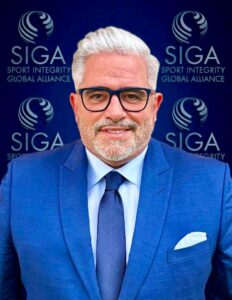
By Emanuel Macedo de Medeiros
Co-Founder & Global CEO, SIGA
FIFA’s credibility is at stake. Its Council must commit to independent scrutiny and lasting governance reform, whoever leads it next.
The eyes of the world are on FIFA. On 15 October, they will be on its Council.
Every member entering that room carries a responsibility to the whole football community. The decisions taken, and those avoided, will shape FIFA’s credibility and the institution its next leadership will inherit.
Political agreement may prove elusive. That cannot become an excuse for postponing scrutiny or diluting reform.
An election determines who leads FIFA. It does not establish whether the system through which they lead is fit for purpose.
The Council must address that question now.

EXAMINE HOW POWER IS EXERCISED
The questions surrounding FIFA Forward Enterprise, the Peace Prize and the handling of disciplinary matters reach across commercial strategy, political engagement and institutional authority. Each requires examination on its merits, with evidence and full respect for due process.
Separate explanations will not establish whether FIFA’s governance is adequate. The review must examine the system behind the decisions.
The President’s exercise of authority, the Council’s ability to deliberate, authorise and supervise, the responsibilities of Congress and the administration, and the independence of oversight and judicial bodies must all fall within its scope. The mandate must cover major strategic, commercial and institutional decisions, extending beyond the controversies that prompted it.
The review must assess whether oversight and judicial bodies can discharge their responsibilities effectively and independently, while respecting their jurisdiction over individual cases.
Who can commit FIFA, and on whose authority? Who can challenge a proposal before the commitment is made? Can those enforcing the rules act without interference when powerful interests are involved?
After more than thirty years building and leading institutions in football and the wider sports sector, I know that strong leadership is necessary. I also know that effective governance cannot depend on a leader’s willingness to be challenged.
The review must distinguish rules that were breached, safeguards that failed and rules that permitted inadequate scrutiny. Each requires a different remedy.
Compliance cannot close the examination if the rules themselves provide insufficient protection.

INDEPENDENCE PROTECTS THE INSTITUTION
The deeper the division and distrust, the greater the need for scrutiny that neither side controls.
An internal working group can contribute expertise and help implement reform. It cannot, by itself, provide independent assurance about the system in which its members exercise authority.
Nor does an external appointment automatically establish independence. Transparent selection, disclosed conflicts, a sufficient mandate, access to evidence and freedom to publish must be secured from the outset.
These safeguards protect leadership against prejudgment and those raising concerns against conclusions controlled by the people they question. The examination must follow the evidence, including when its findings disappoint those who demanded it.
For SIGA, this principle applies equally to those defending FIFA and those seeking change. Accountability cannot be reserved for opponents. Everyone must be prepared to lead by example.
Sporting autonomy is strengthened when institutions demonstrate that they can accept scrutiny and correct their weaknesses.

REFORM MUST CHANGE THE PRACTICE
Reform must change how FIFA is governed and operates.
Governing bodies must exercise their responsibilities before decisions bind the institution. The Council needs timely information and a genuine opportunity to challenge proposals. Responsibilities must be clear and respected. Conflicts of interest must be disclosed and managed. Independent bodies need the authority, resources and protection to act.
Leagues, clubs, players and supporters need effective representation in decision-making bodies, with defined rights and responsibilities. Their participation must carry influence over the decisions affecting their future.
The SIGA Universal Standards on Good Governance in Sport provide explicit benchmarks for examining authority, oversight, conflicts of interest and stakeholder participation. SIRVS, the SIGA Independent Rating and Verification System, connects those benchmarks to evidence and independent assessment. Together, they provide a practical framework for identifying governance gaps and assessing whether corrective measures work.
The test is whether safeguards operate when needed and improvements can be independently verified. That is how governance helps prevent the next institutional crisis.

WHAT MUST BE CLEAR THE DAY AFTER
On 16 October, world football should know what will be examined, how reviewers will be selected, how independence will be protected and the timetable for publishing findings. Necessary legal restrictions on disclosure must be narrowly defined and explained.
FIFA must commit to a public, reasoned response. Accepted recommendations need named responsibilities and deadlines. Rejections need explanations. Where reform requires Congress approval, the proposals and timetable for submission must be made public.
Implementation and effectiveness must then be independently verified.
A report cannot become the place where reform ends.
These commitments must survive changes in alliances and leadership. Otherwise, FIFA’s reform will remain dependent on the very power it is meant to scrutinise.
The responsibility for reform belongs to FIFA. Its credibility must extend beyond FIFA.
On 15 October, the Council has an opportunity to bind the institution to a credible process of scrutiny, correction and accountability. Every candidate for the FIFA presidency should publicly commit to these principles and conditions, including independent verification of implementation.
Whoever wins must honour that commitment.
FIFA’s future must rest on safeguards no President can override, accountability no election can suspend and an institution whose interests come before those of any leader.

– THE END –
ABOUT SIGA
SIGA is the world’s leading organisation for Sport Integrity. We are creating a whole new landscape for the sports industry by delivering independent global rating and certification for world Sport to ensure it is governed and operates under the highest integrity standards: The SIGA Universal Standards.
Funded by our Members, SIGA is a non for profit global independent organisation with one aim: To ensure the sport industry is governed under the highest integrity standards so that the values of sport are protected.
SIGA is the only organisation to bring together sport, governments, academia, international organisations, sponsors, business, rights holders, NGOs and professional services companies, from every region in the world, around a common cause of fostering greater integrity throughout sport.
SIGA is headquartered in Geneva, Switzerland, as a non for-profit association, and comprises of the following continental subsidiaries: SIGA AMERICA, SIGA ASIA, SIGA EUROPE and SIGA LATIN AMERICA.
For more information on SIGA, including its vision, mission and reform agenda, please refer to the website: www.siga-sport.com and FAQs.
To contact SIGA, please email: comms@siga-sport.com.
@Sigalliance – Twitter, Instagram, Linkedin | #SIGA #SIGAWoW