

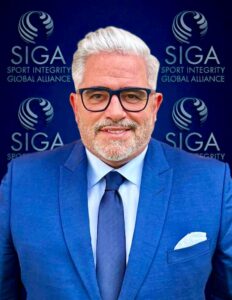
By Emanuel Macedo de Medeiros
Co-Founder & Global CEO, SIGA
On 15 October, the FIFA Council will meet.
Nobody should expect the divisions that have opened up in world football to disappear around the Council table. Positions have hardened and trust has eroded, possibly beyond repair between some of those involved.
There may be no reconciliation. There may not even be a compromise.
So be it.
FIFA does not need artificial unanimity. But surely there is one point on which everyone can agree: world football needs stronger governance, greater transparency and effective independent scrutiny.
Indeed, the breakdown of trust makes them more necessary, not less.
Where trust ends, independent scrutiny must begin.
 QUESTIONS THAT REQUIRE ANSWERS
FIFA withdrew FIFA Forward Enterprise, acknowledged mistakes, apologised and announced a review. At the same time, it maintained that everything that had been done complied fully with its regulatory framework.
Taken together, those two statements raise an unavoidable question: if the rules were followed, were the rules good enough?
How was a project of such strategic importance conceived and developed? Under what mandate? What were the respective roles of the President, the Council and the administration? What checks and balances operated? Who was consulted and what information was provided?
These are not accusations. They are legitimate governance questions.
The review announced by FIFA should be considered seriously and on its merits. Nobody who genuinely believes in independent scrutiny should prejudge its quality or conclusions without knowing its mandate, methodology, access to evidence and findings. But an institution facing serious questions about the exercise of its own power cannot reasonably expect institutional assurance alone to settle them.
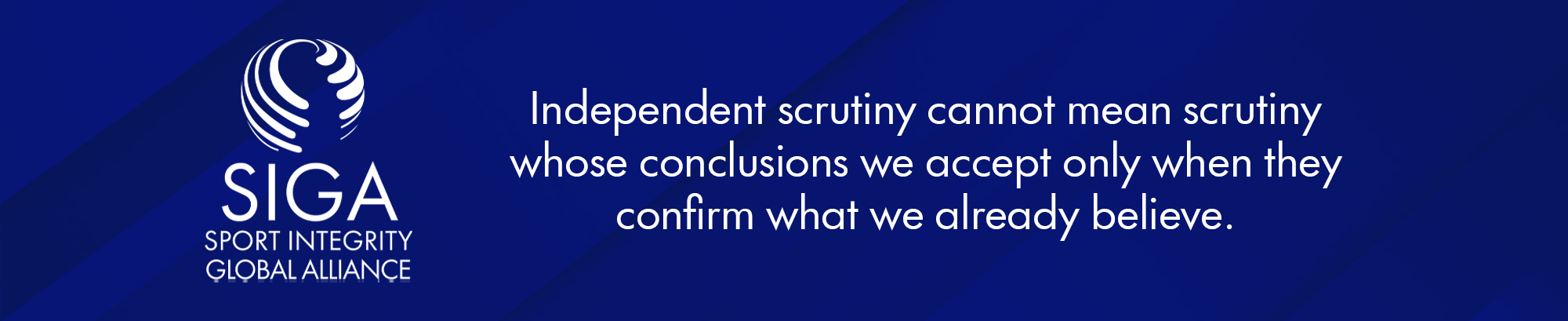
The same applies to FIFA’s critics. Those who have already reached conclusions must be prepared to have them tested against the evidence and against objective standards. Independent scrutiny cannot mean scrutiny whose conclusions we accept only when they confirm what we already believe.
Nor is FFE the only matter requiring answers.
The circumstances surrounding the disciplinary decision concerning Folarin Balogun have raised legitimate questions about the independence of sporting decision-making. When the President of the United States publicly acknowledges contacting the FIFA President about the disciplinary situation of a player, and a subsequent decision enables that player to compete, questions inevitably arise.
That does not establish that improper influence occurred. Nor should anyone presume that it did. But explanations are owed and transparency must prevail.
If the decision was taken independently, by the competent body, according to the applicable rules and without improper influence, the facts should demonstrate it. An independent sporting decision must not merely be described as independent. Its independence must be demonstrable.
 WHEN TRUST IS NO LONGER ENOUGH
This is where 15 October becomes bigger than FFE or Balogun.
Good governance exists precisely so that institutions do not have to depend upon personal trust. Presidents change. Council members change. Alliances change. Interests diverge. Disagreements are inevitable. The rules, checks and balances and lines of accountability must remain.
The developments of recent weeks are therefore significant. FIFPRO and FIFPRO Europe have called for an independent review of FIFA Council decision-making. Debbie Hewitt, Chair of the English FA, FIFA Vice-President and Council member, has sought an independent review and disclosure of relevant documentation. UEFA and CONCACAF are now seeking an independent examination of FIFA’s financial reserves.
These organisations have different interests and different positions. Yet the same requirement keeps emerging: independence.
There is a reason for that. When confidence in institutional self-assessment has been lost, neither reassurance from within nor accusation from outside is enough. Facts must be established in a manner capable of commanding credibility beyond the people presenting them.
I have argued consistently that no institution exercising significant power should be the sole judge of whether that power has been exercised properly. I stand by that principle. But it has an equally important corollary: those challenging the exercise of power cannot appoint themselves its final judges either. The evidence must lead, wherever it leads.
This is not about choosing sides, nor is it about deciding who should be FIFA President. That decision belongs to FIFA’s Member Associations. But the approaching election cannot be allowed to absorb the governance debate.
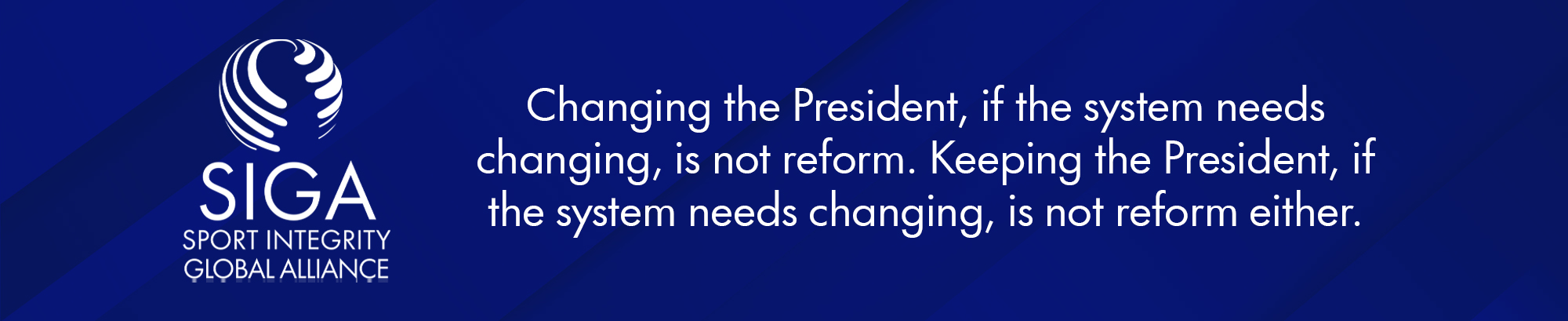
Changing the President, if the system needs changing, is not reform. Keeping the President, if the system needs changing, is not reform either.
The election will determine who leads FIFA. It will not, by itself, determine whether FIFA’s governance is fit for purpose. The institution is bigger than the individual.
 WHAT 15 OCTOBER CAN — AND CANNOT — DO
Nobody should expect white smoke on 15 October. There may be further confrontation, further division and no compromise at all.That is not the point.
15 October does not have to resolve the crisis. But it should ensure that the questions at the heart of it can no longer be avoided.
FFE requires answers. The Balogun case requires answers. The wider questions about FIFA’s governance require answers. Those answers must be grounded in evidence and capable of commanding credibility beyond whichever side provides them.
World football needs a strong FIFA. I have no hesitation in saying that. Its extraordinary sporting, economic and social importance demands strong leadership and strong institutions. But institutional strength is not demonstrated by avoiding scrutiny. It is demonstrated by being able to withstand it.
Perhaps this is the common ground still available amid everything that currently divides world football. Not agreement about personalities. Not agreement about responsibility. Not agreement about the presidential election. And not necessarily agreement about what should happen next.
Something more fundamental: agreement that the facts must be established independently; that transparency must prevail; that FIFA’s governance must be objectively assessed; and that whatever the evidence shows needs changing must be changed.
The protagonists may no longer trust one another. The institution cannot afford the same luxury.
That is why 15 October matters. Not because everyone will agree, but because, precisely when trust has broken down, governance must be strong enough that they do not have to.
Where trust ends, independent scrutiny must begin.
That is what the world of football has every right to expect.
 – THE END –
ABOUT SIGA
SIGA is the world’s leading organisation for Sport Integrity. We are creating a whole new landscape for the sports industry by delivering independent global rating and certification for world Sport to ensure it is governed and operates under the highest integrity standards: The SIGA Universal Standards.
Funded by our Members, SIGA is a non for profit global independent organisation with one aim: To ensure the sport industry is governed under the highest integrity standards so that the values of sport are protected.
SIGA is the only organisation to bring together sport, governments, academia, international organisations, sponsors, business, rights holders, NGOs and professional services companies, from every region in the world, around a common cause of fostering greater integrity throughout sport.
SIGA is headquartered in Geneva, Switzerland, as a non for-profit association, and comprises of the following continental subsidiaries: SIGA AMERICA, SIGA EUROPE and SIGA LATIN AMERICA.
For more information on SIGA, including its vision, mission and reform agenda, please refer to the website: www.siga-sport.com and FAQs.
To contact SIGA, please email: comms@siga-sport.com.
@Sigalliance – Twitter, Instagram, Linkedin | #SIGA #SIGAWoW