

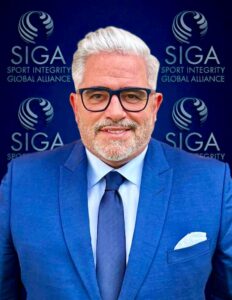
By Emanuel Macedo de Medeiros
Co-Founder & Global CEO, SIGA
The debate over the future leadership of FIFA is gathering pace. Inevitably, much of the attention is focused on personalities, alliances, candidacies and the next presidential election. That is understandable. Leadership matters. Elections matter. The character, judgment, competence, independence of mind and sense of responsibility of the person entrusted with leading world football matter enormously.
But if the present crisis teaches us anything, it is that the future of FIFA cannot depend only on who occupies the Presidency.
The deeper question is this: what kind of institution should any FIFA President, present or future, be required to lead?
If the credibility and stability of world football depend excessively on the personality, restraint or judgment of one individual, then the problem is not simply the individual. It is the system around the office.
FIFA is one of the most powerful organisations in global Sport. It regulates, organises, commercialises, distributes, invests and decides. It manages immense financial resources, oversees competitions of extraordinary global reach, engages with governments, broadcasters, sponsors and investors, and exercises influence across 211 national associations.
Power of that magnitude requires institutions capable of matching it.
Strong leadership should never require weak institutions. Quite the contrary. The greater the power, the stronger the safeguards must be.
That is where reform begins.
POWER NEEDS COUNTERWEIGHTS
The first issue is the concentration of power.
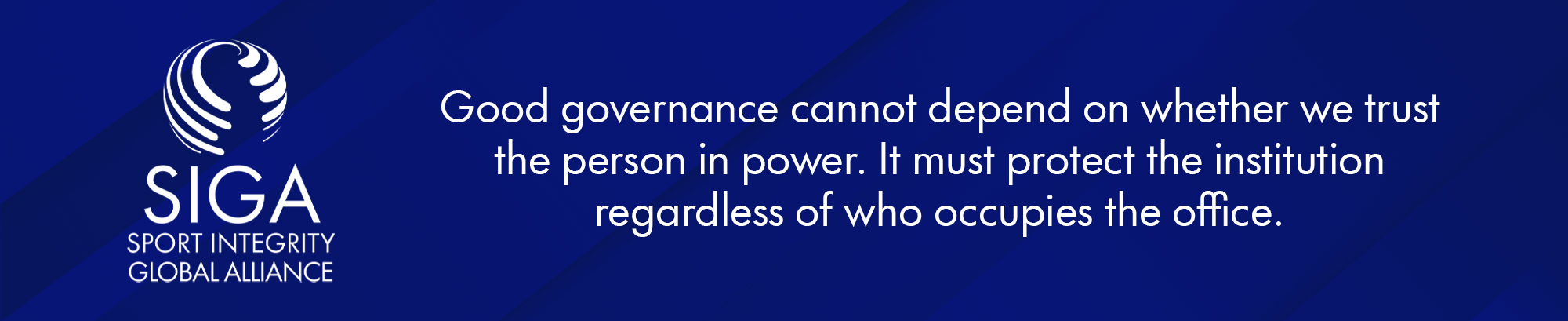
Good governance cannot depend on whether we happen to trust the person exercising authority at a particular moment. It must ensure that the institution remains safe, functional and accountable regardless of who is in charge.
FIFA needs strong leadership, but strong leadership is not the same as excessive concentration of authority.
That leads directly to the FIFA Council. If the Council is the principal governing body between Congresses, then it must genuinely govern. Its members must receive full and timely information, deliberate freely, have access to independent advice where required, and possess the practical authority to challenge proposals, demand answers, seek alternatives and, when necessary, say no.
A governing body that merely endorses decisions shaped elsewhere is not governing.
A strong Council should be able to support a President when that President is right and challenge the President when the institution requires it. That is not confrontation. It is governance.
WHO LEADS, WHO GOVERNS, WHO MANAGES?
There is also a legitimate question about the separation between political leadership, institutional oversight and executive management.
In many mature governance systems, the responsibilities of the Chair and the Chief Executive Officer are deliberately distinct. One leads the governing body and ensures effective oversight; the other manages the organisation and is accountable for executive delivery.
FIFA is not a listed company. But the specificity and autonomy of sport cannot become an argument against basic governance principles. On the contrary!
Who leads? Who governs? Who manages? Who holds each of them to account?
These questions are not theoretical. They are fundamental.
Under FIFA’s current structure and nomenclature, the principle should be clear: the President should provide political and institutional leadership; the Council should exercise genuine governance and oversight; and the Secretary General and the administration should manage the organisation under a clear, credible and sufficiently autonomous mandate. The purpose is not to create bureaucracy. It is to ensure balance.
Because separation written into statutes means little if, in practice, one centre of power dominates the others.
INDEPENDENCE MUST BE REAL
The same test applies to FIFA’s ethics, audit, compliance and judicial structures. Their existence on paper is not enough. Independence must be real – in appointment, mandate, resources, tenure, access to information and freedom from improper influence.
A body is not independent because its title says so. It is independent when it can act independently precisely when independence becomes inconvenient.
WHEN POWER, REGULATION AND MONEY MEET
When a sports governing body combines regulatory, competition-organising and commercial functions, the resulting tensions must be recognised and managed. If the same institution makes the rules, organises the competitions and derives substantial commercial value from them, safeguards must be especially strong: transparency, conflict-of-interest rules, independent advice, meaningful stakeholder engagement, separation of responsibilities and scrutiny.
The question is not whether FIFA should be commercially ambitious. Of course it should. Commercial strength can support development, solidarity and growth. The question is whether that ambition is pursued within structures capable of protecting football and the institution itself.
Any proposal capable of reshaping the control, financing or long-term commercial exploitation of major football assets should trigger enhanced safeguards: independent valuation, appropriate independent legal and financial advice, disclosure and management of conflicts of interest, meaningful consultation, proper approval and a transparent rationale.
Where the consequences are transformative, Independent Scrutiny should also follow.
These safeguards are not obstacles to innovation. They protect good decisions, expose weak ones and help prevent avoidable mistakes from becoming institutional crises – or court cases.
 THE INTEGRITY OF THE MONEY
FIFA’s development and solidarity funding deserves equal attention. For many national associations, these programmes are indispensable. Precisely because they matter so much, their integrity must be beyond question.
History has shown why. Previous corruption cases exposed development money being diverted or misused. That cannot be treated as belonging to another era.
As another FIFA election approaches, the governance principle should be particularly clear: development funding must never become entangled with electoral influence. There must be an unmistakable institutional firewall between the allocation of development resources and the political interests of those seeking office.
Allocations should follow transparent criteria; disbursements should be traceable; projects monitored; results independently verifiable. The controls must demonstrate that development funding serves football development – and nothing else.
The independence of the vote matters. So does the integrity of the money.
This is not an accusation against any particular person or federation. It is a basic requirement of healthy democratic governance. And it brings us back to the central issue.
 THE REAL TEST
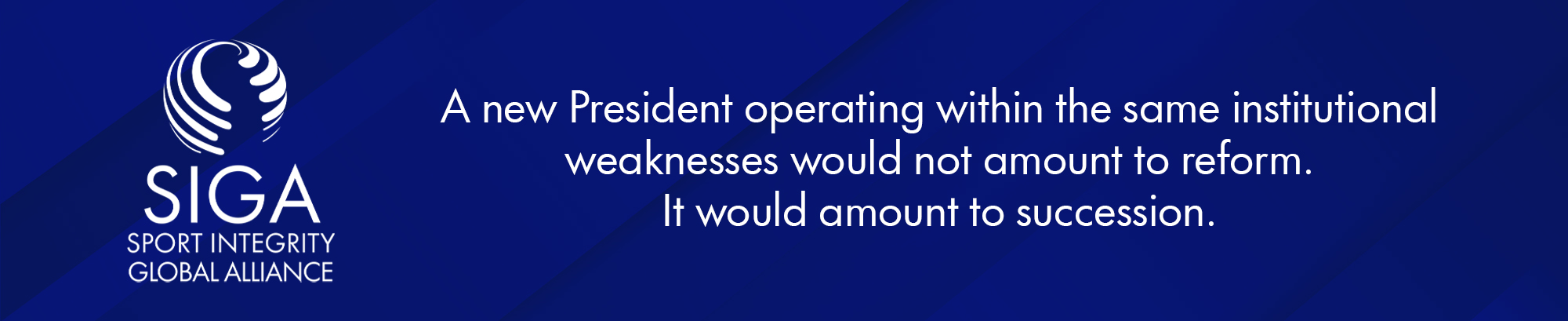
The current crisis must not be reduced to whether one individual stays or another takes his place. The election matters. The person elected matters. But a different name at the top, operating within the same institutional weaknesses, would not amount to meaningful reform. It would amount to succession.
Equally, continuity in leadership without structural reform would leave the fundamental questions unanswered.
Whoever leads FIFA after the next election should therefore be judged not only by the electoral result, but by whether FIFA becomes stronger, more balanced, more transparent, more accountable and more independently scrutinised.
And this is where the discussion must leave the realm of declarations and enter the realm of proof.
There is no shortage of codes, principles or statements about good governance in Sport. The real test is whether the institutions exercising the greatest power are prepared to be measured against serious, fit-for-purpose universal standards – and whether they are prepared to have that compliance independently assessed.
For SIGA, that test is clear.
The way FIFA is governed and operates should be compliant with the SIGA Universal Standards on Good Governance in Sport.
Those Standards provide an objective, sport-specific benchmark covering democratic processes, transparency, accountability, conflicts of interest, financial governance, institutional safeguards, checks and balances and the proper exercise of power.
Compliance should not be presumed. It must be demonstrated.
That is where SIGA Independent Rating & Verification System (SIRVS) comes in. SIRVS provides the Independent Scrutiny, assessment, verification and certification required to determine whether an organisation is not merely proclaiming principles, but applying them in practice.
That test should not wait for a winner to be declared. Every candidate whose candidacy is submitted by FIFA’s 18 November deadline should be asked, publicly and directly, whether they commit to these reforms before a single vote is cast in March.
SIGA is ready to act now – not merely in principle. We are prepared to commence a SIRVS assessment of FIFA’s governance immediately and to publish the results in full.
So the questions now become simple.
Is FIFA willing to adopt and comply with the SIGA Universal Standards?
Is FIFA willing to undergo Independent Scrutiny through SIRVS and have its governance independently assessed and certified?
Yes or no?
Many organisations are demanding greater accountability, stronger governance and Independent Scrutiny from FIFA. Will they apply the same principle to themselves?
Will UEFA, the confederations, national associations, leagues and other major stakeholders open themselves to the same standards and the same Independent Scrutiny?
Yes or no?
– THE END –
ABOUT SIGA
SIGA is the world’s leading organisation for Sport Integrity. We are creating a whole new landscape for the sports industry by delivering independent global rating and certification for world Sport to ensure it is governed and operates under the highest integrity standards: The SIGA Universal Standards.
Funded by our Members, SIGA is a non for profit global independent organisation with one aim: To ensure the sport industry is governed under the highest integrity standards so that the values of sport are protected.
SIGA is the only organisation to bring together sport, governments, academia, international organisations, sponsors, business, rights holders, NGOs and professional services companies, from every region in the world, around a common cause of fostering greater integrity throughout sport.
SIGA is headquartered in Geneva, Switzerland, as a non for-profit association, and comprises of the following continental subsidiaries: SIGA AMERICA, SIGA EUROPE and SIGA LATIN AMERICA.
For more information on SIGA, including its vision, mission and reform agenda, please refer to the website: www.siga-sport.com and FAQs.
To contact SIGA, please email: comms@siga-sport.com.
@Sigalliance – Twitter, Instagram, Linkedin | #SIGA #SIGAWoW